Lest We Forget - Continued stories of 11th, 12th, and 14th Canadian Armoured Regiments that our father may have told.
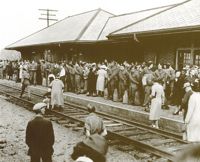
Convoy to England Bridging the Atlantic supply lifeline was onerous and dangerous work and Canadians shared in the worst hardships experienced in the war at sea. Navigation in the North Atlantic was hazardous in the extreme. While the Royal Navy was able to assert its superiority over the German surface fleet, the menace from German U-boats (Unterseebooten) mounted. By the spring of 1941, U-boats were sinking merchant ships faster than they could be replaced. For merchant sailors - including boys as young as 15 - the odds were bad. Less than half of merchant mariners survived the sinking of their ship. Men died not only from enemy attack, but from exposure and accidents in the fog and winter gales. The route to England was seriously threatened so the Canadian escort ships would have to strive to fend off submarine attacks while rescuing survivors of torpedoed merchant ships, but had to limit their searches to the immediate vicinity of the convoy. Nor was protection sufficient to prevent heavy losses. There were too few naval vessels and maritime patrol aircraft available, and the resources we did have included a severe lack of technical modernization, and training. Under these conditions the Battle of the Atlantic was the longest campaign of the war and mostly fought by Canadians. If it was a nightmare for the young naval sailors at action stations in an escort, it was 10 times worse for the merchant seamen. For the most part, all the merchant captain could do was keep his station and hold steady against all his instincts as sitting ducks in a doomed formation. And when the U-boats attacked, all they could do was watch the blazing death of stricken ships, listen to the cries of help and pray the next torpedo was not for them.
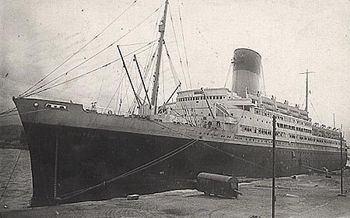
The Ontario Regiment, 11th Canadian Tank Battalion embarked on the SS Pasteur for United Kingdom on Saturday June 21st 1941. We were part of Convoy HX-113, with 58 ships, to make our way across the Atlantic Ocean to Liverpool, England. SS Pasteur was a turbine steam ship built as a commercial transport for Atlantic crossings and was commandeered from her owners to serve Canada during the war. Throughout the war she carried 220,000 troops, and 30,000 wounded, a total of 370,669 miles in military service. After the war she later sailed as the Bremen and in an extraordinary coincidence in the last vacation of my life we toured the east coast and I recognized the Bremen right away as the ship I sailed to Europe on. Due to her speed, as a troop transport, the SS Pasteur usually made her crossings alone, without a warship escort, rather than a member of a convoy. However, our trip in convoy departed with escort ships including our destroyer HMCS OTTAWA and the
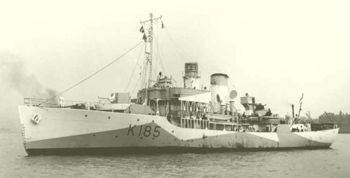
Corvettes BITTERSWEET, CHAMBLY, COLLINGWOOD, FRENCH and ORILLIA, and the armed merchant cruiser ALANIA. It was a slow, 9-knot convoy for ships of sustained speeds less than 15 knots.
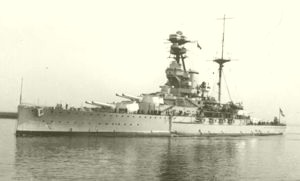
The revenge class battleship HMS ROYAL SOVEREIGN joined us eight days later along with British destroyers KEPPEL, LINCOLN, SABRE, VENOMOUS, and WOOLSTON, our corvette SUNFLOWER, and anti-submarine trawler WELLARD. A half million service personnel left for battle in Europe, just as we did, from Halifax Harbour's Pier 21. Uncertainty was the most prevailing thought. When we walked through what was called the shed, none of us knew if these would be our last foot steps on Canadian soil. Fortunately, most of us would return to fanfare of bands playing and crowds cheering, having only lost our innocence.
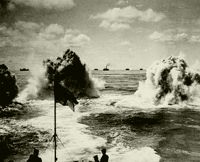
Most of the ships used for troop transport from Halifax belonged to the Canadian Pacific Line. The passenger liners were all set up for cruising-not for military traffic but were quickly brought into military service. Originally the only change to the ship-was repainting over its white superstructure at Quebec to battleship grey but by 1941 these were also armed with six inch guns. The Pasteur in which I traveled was one of the many, conscripted troopships which brought our large Canadian contingent through the Atlantic. The voyage was not without difficulty as we helped man the ships' guns through certain intervals of attack. You just couldn't stand around through it. Of 23 CP's Trans-Pacific liners, called up for military service only five survived the war. The SS Pasteur not only survived WWII but was also in military service as troop transport during the VeitNam War but unfortunately in 1980, apparently operating under the duress of poor maintenance, she rolled over onto her port side and sank stern first into Indian Ocean while under tow to harbour.
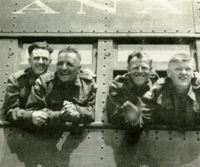
During the first few days of the voyage on the stormy Atlantic probably half the men missed at least one meal, but after that the weather was fine and, despite cramped quarters, regular day-to-day shipboard life prevailed. At 31, I was older than many of the fellows, we talked about life at home, who we had to leave behind, and one young chap had only just been married so had left his bride of a few days. I showed pictures of Billy, my six year old, and my wife Val, who was expecting our second child. I remember lying in my bunk later, upset to be thinking I may not ever see my unborn child.
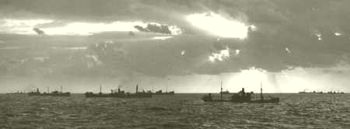
The 13 day trip across the Atlantic was slow and dangerous, especially when out of range of Allied air cover. The sailors called it the "black pit" and it was in that 300 mile stretch of mid-Atlantic where Canadian and British air support did not reach that wolf packs of German submarines lay in wait. Poised on the wind lashed deck of the ship I shrugged against the biting cold of the North Atlantic, with my thoughts locked on the almost certain fate that awaited me when we suddenly lost a ship on the far side during the night. Nothing anyone could do about it. There was a terrific explosion just at dark and a 10,000-ton merchantman went to the bottom in less than a minute. This was followed in rapid succession by two more terrible explosions within minutes and two more large ships, torn in half, plunged out of sight. It raised terrible feelings to see the flickering lights of survivors in the water go out one by one ... as we moved on into the night. Before we would land at Liverpool, six merchant ships were lost during the convoy. There were long, long hours of thinking what it all means. The vastness of the sea is beyond all description, but it does something way down deep inside me, and to be out here, part of this grim relentless struggle brings me emotions that I have never experienced before. I know I will never forget these days and nights.



